

Mein Blog
Michael Ebert – Founder tennis4kids

Michael Ebert – Founder tennis4kids
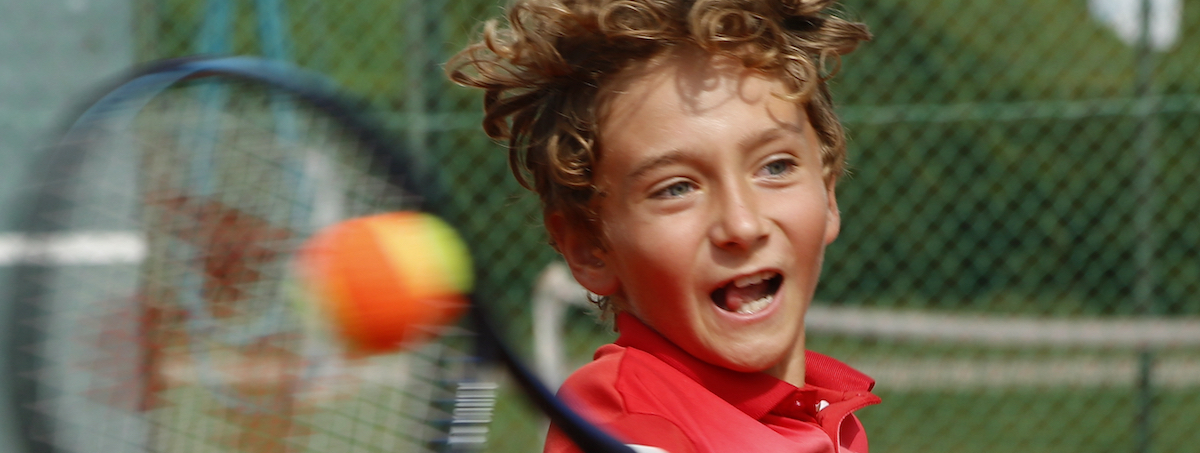
The children are trained before they have learned to play
If we look at today’s world of play and movement for children, it quickly becomes clear that it is hardly comparable to that of a few decades ago. Unfortunately, the versatile, natural ball school of the streets, parks and courtyards has all but disappeared. Unfortunately, this also means that child-friendly, versatile and joyful motor experiences with and around the ball are lost, which children then lack when they start sport-specific training and quickly become overwhelmed. Prof. Dr. Klaus – founder of the Ball School Heidelberg – speaks here of the regrettable loss of street play culture.
Elementary ball skills such as throwing, catching, bouncing, dribbling, kicking and hitting used to be an integral part of children’s everyday motor skills. They are a basic prerequisite for learning many types of sport and used to be acquired in a variety of games, usually without guidance. However, unguided play, i.e. play without instructions and constant corrections from parents, trainers or instructors, is of great importance for children’s development.
Children usually intuitively adapt the demands of the game to their own abilities. They become creative and develop their own problem-solving skills for their play tasks. Children of kindergarten and preschool age do not actually need organized (club) training to acquire a wide range of motor skills and basic ball skills. Instead, they need an environment that offers them developmentally appropriate opportunities to move around sufficiently and play in a variety of ways and, above all, without supervision. Of course, encouragement from their parents also plays an important role here.
However, as many children do not have these opportunities in their living environment, or not enough of them, they are increasingly attending various sports clubs at a very young age. Girls and boys aged three to four in tennis clubs and tennis schools are no longer a rarity. Regardless of their motor development and lack of ball skills, children are often trained here from the very beginning, before they have learned to play.

Innovative teaching concept for children aged 4 to 11
The Kidstennis ABC is an innovative teaching concept for children aged 4 to 11. It is based on the joint concepts of Michael Ebert, MSc. (founder of tennis4kids) and Prof. Dr. Klaus Roth (founder of the Ball School Heidelberg), which were developed and published as part of the successful Ball School Tennis book project. The Children’s Tennis ABC uniquely combines tennis4kids’ decades of successful experience in developing children’s tennis programs with the scientifically evaluated concept of the Heidelberg Ball School.
From a playful start to the transition to youth tennis, the ABC of children’s tennis is based on the simple formula “from the general to the specific” and takes into account a versatile development of the children at the beginning instead of an early specialization. The tennis-specific training follows clear, easy-to-understand principles, particularly with regard to holistic development, systematic game development on smaller courts with slower red-orange-green balls and a racket length that is sensibly adapted to the child’s height. Right from the start, the focus is on children playing with each other and introducing them to the actual aim of the game – playing for points.
The Kidstennis ABC not only provides the theoretical concepts, but also training programs that have been tried and tested over many years to achieve the defined learning goals. This provides trainers, coaches, parents and children with a structured, comprehensible way of systematically training children in tennis in line with their development. The step-by-step development, in conjunction with sensible training planning taking into account biological development, resilience and performance in childhood and adolescence, as well as a child-friendly tournament concept that focuses on the acquisition of important playing skills, enable a safe introduction to competitive tennis.

Clearly structured and easy to understand
The kidstennis tennis ABC is based on the Long Term Athlete Development Model (Balyi, Way & Higgs, 2013) with its successive stages and thus initially takes into account a versatile development of the children instead of early specialization. It follows clear, easy-to-understand principles and in this form provides a particularly suitable “software” for the changes in the “hardware” for U10 children’s tennis (Play&Stay/tennis10s) prescribed by the ITF worldwide since 2012. Especially with regard to a versatile and developmentally appropriate holistic training of the children and the systematic game (development) on smaller courts with slower Red-Orange-Green balls and rackets that are sensibly adapted to the body size. The development guide not only ensures a playful introduction to playing with the ball, but also enables a safe introduction to competitive tennis in later years.
The Mini Ball School Tennis is the first stage in the ABCs of children’s tennis and enables children from around 4 years of age to get started in a developmentally appropriate way. It is based on the Mini Ball School program of the Ball School Heidelberg and therefore initially promotes versatile training for children. The game is played not only with the racket, but also with the hands and feet. When playing with the racket, the focus is on playful, unguided learning in which the children should implicitly develop a feel for the racket. The Mini Ball School Tennis contains many games from the Mini Ball School that have been adapted for use on the tennis court, while the Mini Ball School Tennis also provides a variety of new game ideas.

The Ball School Tennis is also a possible entry point into the ABC of children’s tennis for children aged 6 and over. Building on the basics already acquired and taking into account the principles of the Heidelberg Ball School, children in this program develop basic coordinative, perceptive-motor and technical-tactical (tennis-specific) skills. Right from the start, the children learn to recognize the different phases of the tennis game, to “read” situations correctly and to make appropriate decisions. At the end of this level, the children are MatchFIT and complete the MatchFit Check. This proves that they are able to play a match independently, count and make decisions in accordance with the rules and in a fair sporting manner.

Children who have successfully completed the MatchFit check and want to continue playing tennis continue their tennis-specific training in fundamental training, the third stage of our ABC children’s tennis development guide. Basic technical and tactical skills that have already been acquired are initially repeated, deepened and consolidated under familiar playing conditions. Only as physical development progresses will these skills be transferred to the next “hardware level”. By the end of this training level, the children should have mastered all basic techniques and be able to use them confidently and consistently when playing with partners.

Playing and practising as part of talent development, the fourth and final stage of our development guide, is reserved for those children who are intensively involved in tennis, train several times a week and regularly take part in competitions. The clear overarching goal of this training level is to optimize basic technical and tactical skills. The playing conditions adapted to the individual development of the children play an important role in this. Ultimately, the children at this training level should be prepared in the best possible way for playing on the normal pitch with the yellow ball in the u12 age group.

Firmenbezeichnung: tennis4kids KG
Rechtsform: Kommanditgesellschaft
Firmensitz: 1220 Wien
Firmenbuchnummer: FN-352816y
Firmenbuchgericht: Wien
Geschäftsanschrift: Steigenteschgasse 154/Stg.3/RH 10 – 1220 Wien
Telefon: +43 664 2232001
E-Mail: info@tennis4kids.at
UID-Nummer: ATU66501939
Bankverbindung: IBAN AT52 2011 1296 5459 4400 | BIC: GIBAATWWXXX
Medieninhaber: tennis4kids KG
Unternehmensgegenstand:
Sitz des Medieninhabers: Steigenteschgasse 154/Stg.3/RH 10 – 1220 Wien
Haftung für Inhalte
Die Inhalte unserer Seiten wurden mit größter Sorgfalt erstellt. Für die Richtigkeit, Vollständigkeit und Aktualität der Inhalte können wir jedoch keine Gewähr übernehmen. Als Diensteanbieter sind wir gemäß § 7 Abs.1 TMG für eigene Inhalte auf diesen Seiten nach den allgemeinen Gesetzen verantwortlich. Nach §§ 8 bis 10 TMG sind wir als Diensteanbieter jedoch nicht verpflichtet, übermittelte oder gespeicherte fremde Informationen zu überwachen oder nach Umständen zu forschen, die auf eine rechtswidrige Tätigkeit hinweisen.
Verpflichtungen zur Entfernung oder Sperrung der Nutzung von Informationen nach den allgemeinen Gesetzen bleiben hiervon unberührt. Eine diesbezügliche Haftung ist jedoch erst ab dem Zeitpunkt der Kenntnis einer konkreten Rechtsverletzung möglich. Bei Bekanntwerden von entsprechenden Rechtsverletzungen werden wir diese Inhalte umgehend entfernen.
Haftung für Links
Unser Angebot enthält Links zu externen Webseiten Dritter, auf deren Inhalte wir keinen Einfluss haben. Deshalb können wir für diese fremden Inhalte auch keine Gewähr übernehmen. Für die Inhalte der verlinkten Seiten ist stets der jeweilige Anbieter oder Betreiber der Seiten verantwortlich. Die verlinkten Seiten wurden zum Zeitpunkt der Verlinkung auf mögliche Rechtsverstöße überprüft. Rechtswidrige Inhalte waren zum Zeitpunkt der Verlinkung nicht erkennbar.
Eine permanente inhaltliche Kontrolle der verlinkten Seiten ist jedoch ohne konkrete Anhaltspunkte einer Rechtsverletzung nicht zumutbar. Bei Bekanntwerden von Rechtsverletzungen werden wir derartige Links umgehend entfernen.
Urheberrecht
Die durch den Seitenbetreiber erstellten Inhalte, Fotos und Werke auf diesen Seiten unterliegen dem österreichischen Urheberrecht. Die Vervielfältigung, Bearbeitung, Verbreitung und jede Art der Verwertung außerhalb der Grenzen des Urheberrechtes bedürfen der schriftlichen Zustimmung des jeweiligen Autors bzw. Erstellers. Downloads und Kopien dieser Seite sind nur für den privaten, nicht kommerziellen Gebrauch gestattet.
Soweit die Inhalte auf dieser Seite nicht vom Betreiber erstellt wurden, werden die Urheberrechte Dritter beachtet. Insbesondere werden Inhalte Dritter als solche gekennzeichnet. Sollten Sie trotzdem auf eine Urheberrechtsverletzung aufmerksam werden, bitten wir um einen entsprechenden Hinweis. Bei Bekanntwerden von Rechtsverletzungen werden wir derartige Inhalte umgehend entfernen.
Datenschutz
Die Nutzung unserer Webseite ist in der Regel ohne Angabe personenbezogener Daten möglich. Soweit auf unseren Seiten personenbezogene Daten (beispielsweise Name, Anschrift oder E-Mail-Adressen) erhoben werden, erfolgt dies, soweit möglich, stets auf freiwilliger Basis. Diese Daten werden ohne Ihre ausdrückliche Zustimmung nicht an Dritte weitergegeben.
Wir weisen darauf hin, dass die Datenübertragung im Internet (z.B. bei der Kommunikation per E-Mail) Sicherheitslücken aufweisen kann. Ein lückenloser Schutz der Daten vor dem Zugriff durch Dritte ist nicht möglich.
Der Nutzung von im Rahmen der Impressumspflicht veröffentlichten Kontaktdaten durch Dritte zur Übersendung von nicht ausdrücklich angeforderter Werbung und Informationsmaterialien wird hiermit ausdrücklich widersprochen. Die Betreiber der Seiten behalten sich ausdrücklich rechtliche Schritte im Falle der unverlangten Zusendung von Werbeinformationen, etwa durch Spam-Mails, vor.
Inhaltsverantwortlich
tennis4kids KG | Michael Ebert, MSc.
Steigenteschgasse 154/RH 10
A-1220 Wien
E-Mail: info@tennis4kids.at
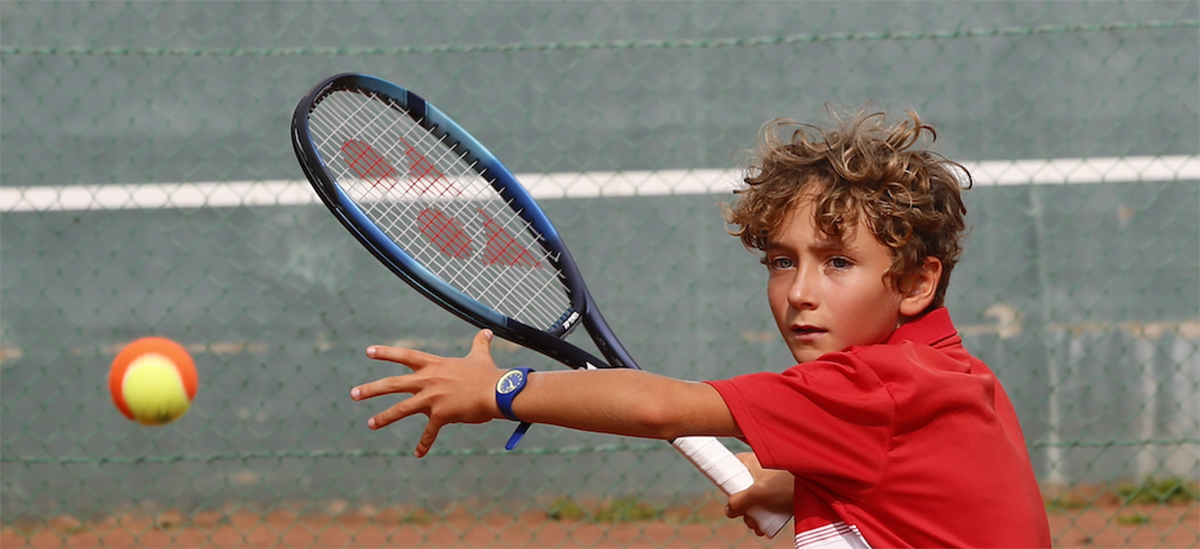
I look forward to hearing from you.
I have been working with children and young people at all levels of tennis for over 35 years. I regularly give lectures at international congresses and symposiums, especially in the area of “Kids Tennis”. Below is a small excerpt of my national and international activities.
Lecturer at international tennis congresses and symposia (excerpt)
ÖTV – Österreichischen Tennisverband (2007 bis 2013)
ÖTV – Österreichischen Tennisverband (2023)
Bundessportakademie (BSPA)
Ball School Heidelberg – National Center Austria
Other

